
Acts 2 :42-47 NLT
The Believers Form a Community
42 All the believers devoted themselves to the apostles’ teaching, and to fellowship, and to sharing in meals (including the Lord’s Supper), and to prayer. 43 A deep sense of awe came over them all, and the apostles performed many miraculous signs and wonders. 44 And all the believers met together in one place and shared everything they had. 45 They sold their property and possessions and shared the money with those in need. 46 They worshiped together at the Temple each day, met in homes for the Lord’s Supper, and shared their meals with great joy and generosity 47 all the while praising God and enjoying the goodwill of all the people. And each day the Lord added to their fellowship those who were being saved.
There’s something magnetic about reading Acts 2:42-47. It describes a community so alive, so connected, so transformed that people were added to their number daily. Not weekly. Not monthly. Daily.
What was their secret? One word: devotion.
When Devotion Runs Deep
Devotion isn’t a warm feeling we get during worship or an occasional burst of enthusiasm for spiritual things. True devotion is far more radical. It’s the fixed position of your heart, mind, and soul, where your commitment, love, and affections are fully on Christ.
Picture a small child who climbed out a window and suddenly realized how far off the ground they were. Dangling there, they cling to the windowsill with white knuckles, calling desperately for their father. That’s devotion—clinging to God with every fiber of your being because you cannot live this life without Him.
The early church understood this kind of devotion. They didn’t dabble in their faith. They consumed it. They lived it. And the results were extraordinary.
Where Devotion Begins
Before we see the devoted community described in Acts 2:42-47, we witness a transformative event: Pentecost. The Holy Spirit descended, Peter preached with power, and his words—drawn from Joel, Psalms 16, and Psalm 110—pierced hearts.
The Word of God is described in Hebrews 4:12 as “sharper than the sharpest two-edged sword, cutting between soul and spirit, between joint and marrow.” It exposes our innermost thoughts and desires. That’s exactly what happened when Peter preached.
When people heard the gospel, they didn’t respond with mild interest. They cried out, “Brothers, what should we do?” And about 3,000 were baptized that day, committing the entirety of their lives to Christ.
Devotion begins with the gospel—hearing it, believing it, and responding to it with wholehearted commitment. Not just dipping your toes in, but diving in completely.
Four Marks of a Devoted Community
1. Devotion Loves God’s Word
“All the believers devoted themselves to the apostles’ teaching.” They didn’t just read scripture occasionally or listen passively. They consumed it like newborns craving milk.
The apostles’ teaching covered everything—the person and work of Christ, salvation, how to live in the fullness of the Spirit, what a Christ-honoring life looks like. They didn’t shrink from declaring all that God wanted people to know. They held onto the pattern of wholesome teaching as something precious and life-giving.
When we truly love God’s Word, we’re armed with it. We read it, meditate on it, and crave it as more important to our souls than physical food is to our bodies. First Peter 2:2 urges us to “crave pure spiritual milk so that you will grow into a full experience of salvation.”
2. Devotion Loves God’s People
The believers devoted themselves to fellowship—koinonia in Greek. But this wasn’t just coffee and casual conversation. This was deep, sacrificial partnership rooted in their shared connection to Christ.
Consider this stunning description: “All the believers met together in one place and shared everything they had. They sold their property and possessions and shared the money with those in need.”
This wasn’t hardship. This was what happened when the Spirit of God moved. Christians were so secure in God, so trusting in His provision, that they were willing to do whatever it took to meet the needs of others.
The Macedonian church exemplified this when Paul wrote that despite being tested by troubles and very poor, they overflowed in rich generosity. When Jesus is truly Lord, there’s a release of resources to meet needs in the community.
Koinonia is also pastoral care—not just the responsibility of designated leaders, but a whole community calling. It’s praying for others, picking up the phone to check in, being a listening ear to someone grieving, encouraging someone in a hard space. We cannot follow Jesus in isolation.
Like the giant redwood trees with their shallow but intertwined root systems, we’re designed by our Creator to need each other. The greater our pain, the more we need God and others around us. Isolation is never the answer.
3. Devotion Produces Awe of God
“A deep sense of awe came over them all.” Early church gatherings were marked by holy seriousness—the fear of the Lord. They worshipped with holy fear and awe, recognizing they were in the presence of God Almighty.
This kind of awe changes everything. It changes how we sing, how we pray, how we care, how we give, how we serve. When we’re gripped by the reality that we’re standing before the King who preserves life by His word, whose throne is surrounded by angels worshipping day and night, worship becomes more than routine.
A journalist once investigated why a small church in a declining industrial town was growing while others shrank. He expected to find clever marketing or modern programs. Instead, he found ordinary people—students, factory workers, retirees, young families, people who’d been through addiction and brokenness—who seemed completely convinced that God was real and present among them.
He wrote: “When they prayed, it was like they were actually speaking to someone who was there. When they sang, the words mattered. I came to study this church, but the truth is I can’t explain what’s happening here. The only thing I know is that these people believe they’re standing in the presence of God. And after a while, you begin to wonder if they might be right.”
That’s contagious awe.
4. Devotion Leads to Growth
“Each day the Lord added to their fellowship those who were being saved.” A devoted church doesn’t attract through clever strategies. It attracts through authentic transformation. God builds and adds to a devoted church.
When friends, neighbors, and coworkers see someone whose words match how they live, who radiates joy, who makes others feel loved and safe—they want what that person has. And who they have is Jesus.
As Paul reminds us: “I planted the seed in your hearts and Apollos watered it, but it was God who made it grow.” Our job isn’t to manufacture growth through programs and creativity. Our job is to give God our hearts, and He’ll do the rest.
The Small Group Solution
The early church didn’t just gather on Sundays. Acts 2:46 tells us “they worshipped together at the temple each day and met in homes.” They went from house to house.
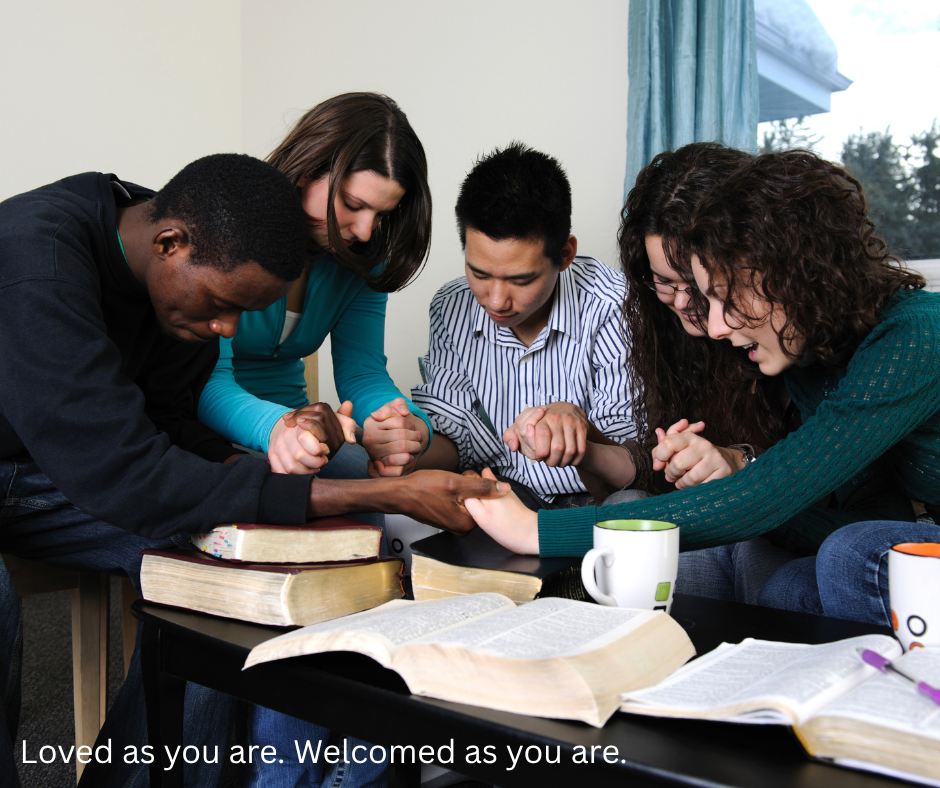
Sunday gatherings alone aren’t enough for the kind of devotion described in Acts 2. Small groups provide the space to wrestle with God’s Word, grow in love for Christ and others, care for one another pastorally, and engage in God’s mission together.
Small groups are the answer to isolation, discouragement, spiritual dryness, and remaining unchallenged in our faith. They’re where we deep dive into Scripture, lift each other up, pray fervently, feast together, and witness to the lost.
The Question Before Us
When the Spirit poured out at Pentecost, Christians didn’t have to choose community. They were so filled, so alive, so on fire for Christ that they were compelled. One gathering a week wasn’t enough. They had to be with other believers.
The same Holy Spirit present at Pentecost is available today. God hasn’t changed. He’s not less powerful. He’s not less interested in building His church.
The question is: Will what the Bible teaches be enough to compel us? Will Acts 2:42-47 devotion become something we long to experience—for our own souls, for the blessing of others, for the glory of Christ?
When every one of us is devoted to Christ, in awe of Him, devoted to prayer, to His Word, and to each other, the possibilities for growth are limitless. God can accomplish infinitely more than we might ask or think through His mighty power at work within us.
All that’s required is white-knuckled devotion—clinging to God with everything we’ve got and refusing to let go.
This resource is produced using original content from our Sunday Service with the assistance of AI.