
Romans 12:9-16 NIV
Love in Action
9 Love must be sincere. Hate what is evil; cling to what is good. 10 Be devoted to one another in love. Honor one another above yourselves. 11 Never be lacking in zeal, but keep your spiritual fervor, serving the Lord. 12 Be joyful in hope, patient in affliction, faithful in prayer. 13 Share with the Lord’s people who are in need. Practice hospitality. 14 Bless those who persecute you; bless and do not curse. 15 Rejoice with those who rejoice; mourn with those who mourn. 16 Live in harmony with one another. Do not be proud, but be willing to associate with people of low position. Do not be conceited.
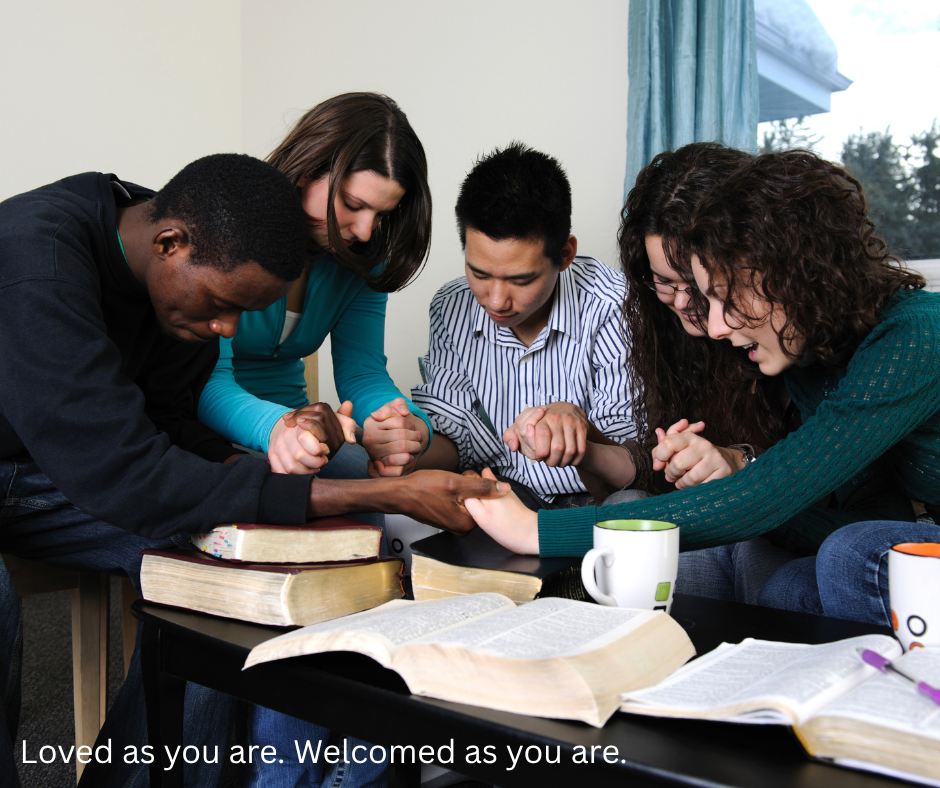
In a world that increasingly values individualism and self-sufficiency, there’s something profoundly counter-cultural about gathering together in small, intimate groups to study Scripture, pray, and do life together. Yet this is precisely what the early church practiced, and what continues to transform lives today.
The Heart of Biblical Community
When we examine Romans 12:9-16, we discover a remarkable blueprint for Christian relationships that challenges our natural tendencies and calls us to something far greater. This passage doesn’t merely suggest pleasant behaviors—it presents radical instructions for how believers should interact with one another and with the world around them.
The foundation begins with a striking command: “Love must be sincere.” This isn’t the superficial politeness we often mistake for Christian love. It’s not the casual “how are you?” exchanged in passing, expecting nothing more than “fine” in response. This is authentic, genuine love that hates evil and clings tenaciously to what is good.
The Revolutionary Nature of Christian Love
To truly understand what this love looks like, we must turn to 1 Corinthians 13, that magnificent chapter that has graced countless weddings yet challenges us far beyond romantic sentiment. Close your eyes for a moment and consider these words:
Love is patient. Love is kind. It does not envy, does not boast, is not proud. It does not dishonor others, is not self-seeking, is not easily angered, and keeps no record of wrongs.
These aren’t mere poetic words—they’re a diagnostic tool for our hearts. When we gather in small groups, when we interact with fellow believers, when we navigate the complexities of church life, this is our measuring stick. Love doesn’t delight in evil but rejoices with the truth. It always protects, always trusts, always hopes, always perseveres.
As Corrie ten Boom—that remarkable Dutch woman who hid Jews from the Nazis and endured the horrors of a concentration camp—once observed: “If you look at the world, you’ll be distressed. If you look within, you’ll be depressed. If you look at God, you will be at rest.”
Three Categories of Christian Duty
The passage in Romans gives us practical instruction under three categories: personal duties, family duties, and duties to others.
Personal Duties: The Foundation Within
Before we can effectively love others, we must cultivate certain qualities within ourselves. We must hate what is evil and cling to what is good. This requires discernment, conviction, and courage—qualities that don’t develop accidentally but through intentional spiritual formation.
Family Duties: How We Treat One Another
The instructions for how we treat our brothers and sisters in Christ are both beautiful and challenging:
Honour one another above yourselves. Think about that for a moment. Who is the most important person in your small group? It’s not you. Everyone else is more important than you are. This flies in the face of everything our culture teaches about self-promotion, personal rights, and looking out for number one.
When we gather with other believers, we cannot arrive with an attitude that everything must be done our way, that we know better than everyone else how things should happen. True Christian community requires the death of self-importance.
Be joyful in hope. We have eternal life. We have power. We have a home in heaven. We have rewards awaiting us. Jesus is coming back again. These aren’t empty platitudes—they’re the foundation of Christian joy that transcends circumstances.
Be faithful in prayer. Prayer isn’t just something we do in small groups or on Sunday mornings. Being faithful in prayer means we pray and pray and pray, regardless of where we are or what we’re doing. It becomes the atmosphere we breathe, the constant conversation we maintain with our Father.
Consider the various opportunities for prayer: small groups throughout the week, Sunday morning before church, during the service, after church anywhere around the building, Monday evenings, Tuesday mornings. Prayer should saturate every aspect of our community life.
The Fruit of the Spirit in Community
When Paul wrote to the Galatians, he described the fruit that the Holy Spirit produces in our lives: love, joy, peace, patience, kindness, goodness, faithfulness, gentleness, and self-control. Notice that these aren’t fruits (plural)—it’s fruit (singular). They come as a package, and they’re meant to be displayed most vibrantly in our relationships with one another.
Small groups become laboratories where this fruit is cultivated and tested. It’s easy to be patient when you’re alone. It’s far more challenging when someone in your group repeatedly arrives late or dominates the conversation. It’s simple to be kind in theory; it’s harder when someone’s opinions grate against yours week after week.
Duties to Others: Extending Love Beyond the Church
The final set of instructions addresses how we relate to those outside the faith:
Bless those who persecute you. Rejoice with those who rejoice. Mourn with those who mourn. Live in harmony with one another. Do not be proud but be willing to associate with people of low position. Do not be conceited.
Live in harmony with one another—this command extends beyond fellow believers to encompass all people. We’re instructed to live with an attitude of wanting to get on with people, regardless of whether they are Christians.
Think about your neighbors. Perhaps you have the “nosy neighbor” who keeps track of everything (which can be great for security). Maybe you have neighbors who play loud music until the early morning hours. Or perhaps there’s a family down the street with their collection of loud cars.
The question isn’t whether these neighbors are Christians. The question is: Do we pray for them? Do we seek to live in harmony with them? Do we bring these relationships to our small groups and ask others to pray with us?
The Transformative Power of Small Groups
Being part of a small group of Christians is a tremendous place to be encouraged and challenged to live in harmony with all people. It’s where we confess our struggles, celebrate our victories, and pray for one another’s neighbors, coworkers, and family members.
Small groups provide accountability without judgment, support without enabling, and challenge without condemnation. They’re where theoretical Christianity becomes practical discipleship.
An Invitation to Community
If you’re not currently part of a small group, consider this an invitation. Don’t let another week pass thinking, “Maybe it’s something I should do.” Take action. Talk to someone. Express your interest. Ask for prayer as you consider this step.
Community isn’t optional in the Christian life—it’s essential. We weren’t designed to follow Jesus in isolation. We need each other to grow, to persevere, to become more like Christ.
The beautiful truth is that when we gather together—studying Scripture, praying for one another, sharing meals, bearing burdens, and celebrating joys—we’re not just participating in a church program. We’re living out the very heart of what it means to be the body of Christ.
So the question isn’t whether you have time for a small group. The question is whether you can afford to miss out on this essential element of Christian growth and community. The answer, quite simply, is that you cannot.
This resource is produced using original content from our Sunday Service with the assistance of AI.