
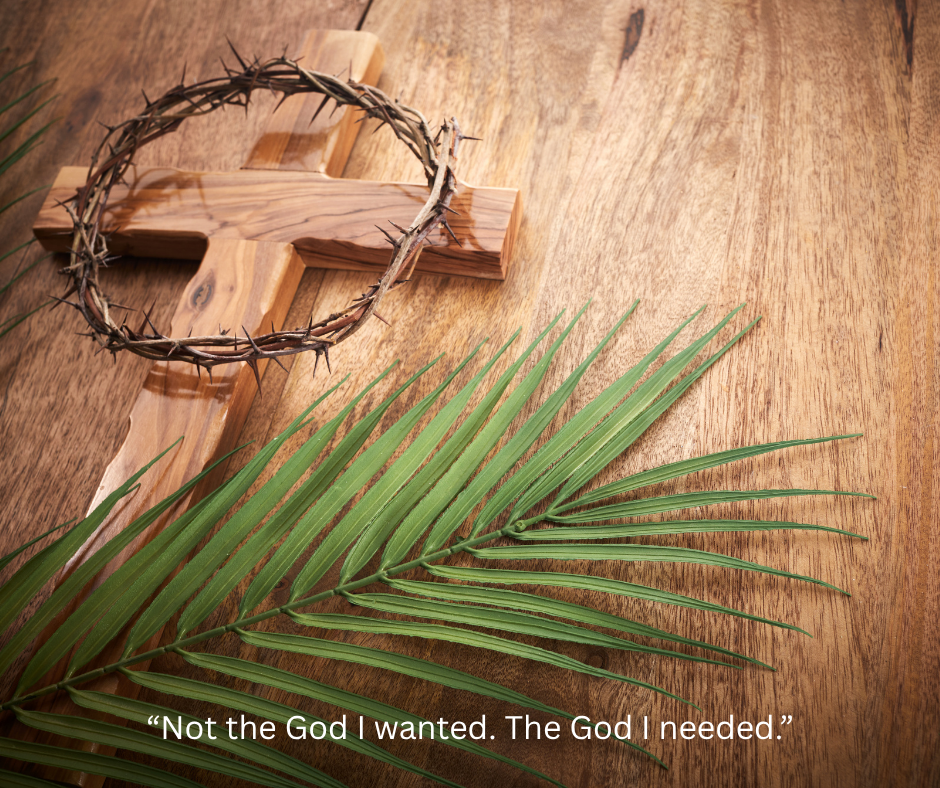
Jesus’ Triumphant Entry
12 The next day, the news that Jesus was on the way to Jerusalem swept through the city. A large crowd of Passover visitors 13 took palm branches and went down the road to meet him. They shouted, “Praise God! Blessings on the one who comes in the name of the Lord! Hail to the King of Israel!” 14 Jesus found a young donkey and rode on it, fulfilling the prophecy that said:
15 “Don’t be afraid, people of Jerusalem. Look, your King is coming, riding on a donkey’s colt.”
16 His disciples didn’t understand at the time that this was a fulfillment of prophecy. But after Jesus entered into his glory, they remembered what had happened and realized that these things had been written about him. 17 Many in the crowd had seen Jesus call Lazarus from the tomb, raising him from the dead, and they were telling others about it. 18 That was the reason so many went out to meet him—because they had heard about this miraculous sign. 19 Then the Pharisees said to each other, “There’s nothing we can do. Look, everyone has gone after him!”
The King Who Disrupts Our Expectations: Reflections on Palm Sunday
The scene is familiar to most of us: palm branches waving, crowds shouting “Hosanna,” a humble donkey carrying a king into Jerusalem. Yet beneath the surface of this triumphant entry lies a sobering reality that challenges everything we think we know about following Jesus.
A Crowd Drawn by Power
Imagine Jerusalem during Passover—a city swelling with perhaps 120,000 pilgrims from Syria, Egypt, Greece, and Rome. For 1,300 years, generation after generation had celebrated this sacred feast, commemorating the blood of the lamb on the doorposts during the Exodus. But this particular Passover was different. This time, the true Passover Lamb was entering the city.
The crowd gathering that day had heard about an extraordinary miracle. Jesus had raised Lazarus from the dead—a man who had been in the tomb for four days. News spread like wildfire through ancient Jerusalem’s version of social media: word of mouth, travelers’ tales, excited whispers in the marketplace. If this man could raise the dead, surely he could liberate them from Roman oppression. Surely he would make their lives easier, safer, more comfortable.
But here’s the uncomfortable truth that John’s Gospel confronts us with: resurrection power might draw people, but it also exposes hearts. Miracles can fascinate us. Power can attract us. Praise can even flow from our mouths. But none of that necessarily means we truly believe in Jesus.
Praise Shaped by Misguided Expectations
The crowd took palm branches—symbols of national political victory—and shouted “Hosanna,” which means “save us now.” They quoted Psalm 118: “Blessed is he who comes in the name of the Lord. Blessed is the King of Israel.” On the surface, this looks like worship. But dig deeper, and you’ll find something troubling.
They weren’t crying out for salvation from sin. They wanted salvation from Rome. They wanted a king on their terms—a conquering warrior on a white horse, dressed in armor, leading troops to overthrow their oppressors. Instead, they got a humble king on a donkey, riding toward a Roman cross.
This is where the scene becomes less sentimental and more sobering. The same crowd worshipping on Palm Sunday would cry “Crucify him!” less than a week later. Why? Because Jesus wasn’t the king they wanted. He was the king they needed.
The Danger of Transactional Worship
This Palm Sunday narrative forces us to examine our own hearts. Are we worshipping the true King Jesus, or have we reshaped him into the kind of king we prefer? Does our praise last only as long as Jesus is doing what we need him to do for us?
Christian faith is not about trusting Jesus to change our circumstances. It’s about following a Saviour King who changes us by calling for our lives—complete surrender to his purposes.
We live in an election year (in many places), with hopes and expectations about leaders, the economy, safety, education, and the future. But the critical question remains: Are our hopes shaping Jesus into the kind of king we want? Or are we letting Jesus be the king he truly is?
Consider Paul’s words in Philippians 4:12-13: “I know how to live on almost nothing or with everything. I have learned the secret of living in every situation, whether it is with a full stomach or empty, with plenty or little, for I can do everything through Christ who gives me strength.”
Is Jesus enough? If he never did anything more for us than die on the cross, would that be sufficient reason to praise him?
Worship becomes transactional when we approach it with this mindset: “God, I’m coming to church, singing songs, attending small groups—so I hope you’ll do these things for me.” The opposite is worship rooted in love: “I do these things because you died on a cross for me. Full stop.”
A King Who Redefines Kingship
Jesus fulfilled the prophecy in Zechariah 9, arriving humble on a donkey 500 years after it was written. This wasn’t weakness—it was purpose. When questioned later, Jesus would say, “Do you think I cannot call on my Father, and he will at once put at my disposal more than twelve legions of angels?” (Matthew 26:53).
Jesus wasn’t powerless. He had a purpose: the cross.
In C.S. Lewis’s “The Lion, the Witch and the Wardrobe,” Susan asks about Aslan the lion: “Is he safe?” Mr. Beaver responds, “Safe? Who said anything about safe? Of course he isn’t safe. But he’s good. He’s the king, I tell you.”
We often prefer a safe, manageable saviour who fits into our expectations and won’t disappoint us. But Jesus is not a king we control. He’s a king we surrender to. Following him is never tidy. He often blows our expectations, notions, and dreams completely out of the water—not to harm us, but because he comes as he is, not as our preferred version.
The Choice Before Us
This Palm Sunday text drives us toward one of two decisions: follow him or reject him.
In Luke 19:27, just before entering Jerusalem, Jesus tells a parable about a king whose subjects say, “We don’t want this man to be our king.” The question for each of us is clear: Which side do we stand on?
Jesus wasn’t crushed for our sins so we could have a more comfortable life. He was beaten so we could be made whole, whipped so we could be healed. Like sheep, we all strayed from God’s path to follow our own, yet all our sins were placed on him and nailed to that cross over 2,000 years ago.
As 1 John 4:10 reminds us: “This is real love. Not that we loved God, but that he loved us and sent his son as a sacrifice to take away our sins.”
Jesus isn’t a king swinging a sword. He’s gentle, lowly, humble, and tender. Today he says to all of us, “Come follow me.”
Don’t make the mistake of the Palm Sunday crowd—thrilled and excited at what Jesus might do for them, yet misguided about who he actually is. He’s not a king to make life easier or solve political challenges. He’s a king who gave his life and asks us to surrender completely to him.
May our hosannas be hosannas of complete trust. May our worship flow not because we expect more from God, but because we’re grateful for all he’s already done. Even if he never did anything more for us, he’s already done everything we need—dying on a cross for our salvation.
That is King Jesus. Worthy of all our praise.
This resource is produced using original content from our Sunday Service with the assistance of AI.