
Eph. 6:21-24
Tychicus, the dear brother and faithful servant in the Lord, will tell you everything, so that you also may know how I am and what I am doing. 22 I am sending him to you for this very purpose, that you may know how we are, and that he may encourage you. 23 Peace to the brothers and sisters, and love with faith from God the Father and the Lord Jesus Christ. 24 Grace to all who love our Lord Jesus Christ with an undying love.
The Eternal Gift: Discovering Grace in Ephesians
There’s something profoundly beautiful about finishing a journey. After months of walking through the book of Ephesians—155 verses, over 3,000 words, six transformative chapters—we arrive at a conclusion that feels less like an ending and more like a beginning.
Written from a Roman prison, where the apostle Paul sat chained to a guard yet free in spirit, this letter has taken us on an extraordinary expedition through the heart of Christian faith. What started in August has culminated in a breathtaking view of God’s grace that changes everything.
A Book of Two Halves
Ephesians presents us with a beautiful architecture: the first three chapters lay the foundation of what we believe—our doctrine, our theological truths. The second three chapters build upon that foundation, showing us how we live—our duty, the practical outworking of those beliefs.
Think of it this way: chapters 1-3 reveal our wealth in Christ, while chapters 4-6 guide our walk in Christ and prepare us for our warfare in Christ.
We’ve journeyed through spiritual blessings, discovered our adoption as God’s children, explored our oneness in Christ, and understood God’s magnificent plan. We’ve learned about unity in the church, living in the light, Spirit-guided families, and standing firm in spiritual battle.
But what ties it all together? What single word captures the essence of this entire epistle?
The Thread of Grace
Grace. Grace. Grace.
This word appears twelve times throughout Ephesians, bookending Paul’s letters like a divine signature. Every one of Paul’s thirteen epistles begins with grace in the opening verses and concludes with grace in the closing benediction. It’s as if he couldn’t write about the Christian life without acknowledging the foundation upon which everything else stands.
But grace doesn’t stand alone. It brings companions: peace (mentioned eight times), love (fourteen times), and faith (seven times). These four spiritual qualities weave together to create the tapestry of Christian living.
Peace That Passes Understanding
“Christ himself has brought peace to us” (Ephesians 2:14). Christ is our peace.
Here’s a profound truth we often miss: peace with God is the basis of peace with each other. When we struggle to find peace with another person, the problem might not be with them at all. It might be that we’ve lost our connection to the source of peace himself.
It’s too easy to think, “Well, they’re not at peace with God, but I am.” That’s a dangerous thought. Our vertical relationship with God determines our horizontal relationships with others. When we’re truly at peace with the Father, peace with our brothers and sisters flows naturally.
Love: The Birthmark of the Christian
Francis Schaeffer once said, “Love is the birthmark of the Christian.” How do people know we belong to Jesus? By our love.
Ephesians 3:17-19 paints an almost impossible picture: understanding how wide, how long, how high, and how deep Christ’s love is. We’re invited to experience a love “too great to understand fully,” yet this incomprehensible love is meant to fill us completely.
Our vertical love—our love for God—becomes the foundation for our horizontal love—our love for others. Faith expresses itself through love. You cannot separate the two. They’re intertwined like threads in a rope, each strengthening the other.
Faith That Unifies
“Until we all come to such unity in our faith and knowledge of God’s Son that we will be mature in the Lord” (Ephesians 4:13). Faith isn’t just personal belief; it’s the shared conviction that unifies the body of Christ.
Faith works through love. It’s not a static possession but a dynamic force that expresses itself in how we treat one another, how we serve, how we sacrifice, and how we stand together.
The Magnificent Truth of Grace
But we must return to grace, for here lies the heart of everything.
Ephesians 2:8-9 contains words that have transformed countless lives: “God saved you by his grace when you believed. And you can’t take credit for this. It is a gift from God. Salvation is not a reward for the good things we have done. So none of us can boast about it.”
Read that again. Let it sink in.
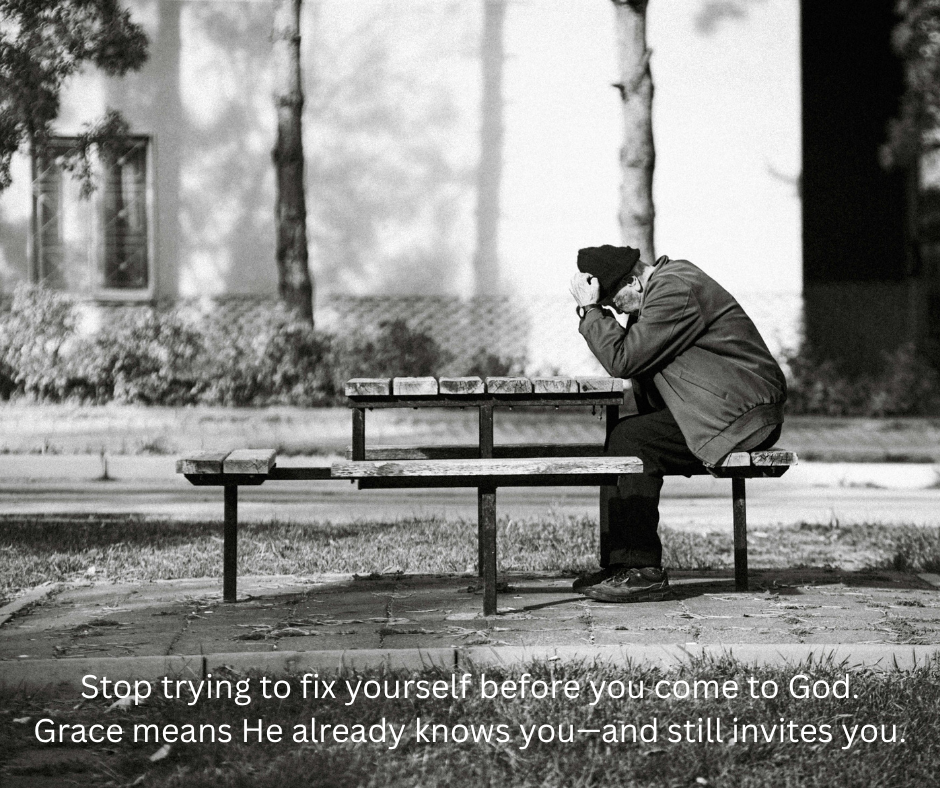
You cannot earn this. You cannot work for it. You cannot be holy enough, strong enough, clean enough, religious enough, or self-disciplined enough to deserve it. God’s grace is a gift—pure, simple, undeserved.
We can stop trying to clean ourselves up because God, in His grace, has done it all for us.
Beyond Salvation
Here’s where many of us get stuck: we think grace is only for salvation. We believe God’s grace saved us when we first believed, and now it’s up to us to live worthy of that grace.
But grace doesn’t stop at salvation. Grace continues in daily living.
We need God’s grace every single day—not because it’s running out, but because we need more of it for the challenges, relationships, and circumstances we face. The stream of grace and righteousness is deeper and broader than the stream of guilt.
Think you’re too guilty? Too far gone? Too broken? The grace available to you is deeper than your deepest shame and broader than your widest failure.
Grace in Action
Grace isn’t just a theological concept to understand; it’s a living reality to experience and extend. We are here to magnify God’s grace—to make it visible, tangible, and real in the lives of those around us.
What does this look like practically? It looks like members of the body of Christ noticing when someone is struggling and stopping to pray. It looks like encouragement offered without being asked. It looks like showing up, being present, and allowing God to use you as a channel of His grace to others.
The ongoing outworking of God’s grace involves you and me. Perhaps today, you’ll be used to pass something of God’s grace onto somebody else.
The Eternal Benediction
As we conclude this journey through Ephesians, we’re left with words that function as both ending and beginning:
“Peace be with you, dear brothers and sisters. May God the Father and the Lord Jesus Christ give you love and faithfulness. May God’s grace be eternally upon all who love our Lord Jesus Christ.”
Eternally. Not temporarily. Not conditionally. Not based on performance.
Eternally.
This means our future arrival in heaven is guaranteed—not because of who we are or what we’ve done, but because of God’s amazing, inexhaustible, eternal grace.
As the old hymn declares: “Amazing grace, how sweet the sound that saved a wretch like me. I once was lost, but now I’m found. Was blind, but now I see.”
May God’s grace be eternally upon you.
This resource is produced using original content from our Sunday Service with the assistance of AI.