
Matthew 6:5-13
“When you pray, don’t be like the hypocrites who love to pray publicly on street corners and in the synagogues where everyone can see them. I tell you the truth, that is all the reward they will ever get. 6 But when you pray, go away by yourself, shut the door behind you, and pray to your Father in private. Then your Father, who sees everything, will reward you. 7 “When you pray, don’t babble on and on as the Gentiles do. They think their prayers are answered merely by repeating their words again and again. 8 Don’t be like them, for your Father knows exactly what you need even before you ask him!
9 Pray like this:
Our Father in heaven,
may your name be kept holy.
10 May your Kingdom come soon.
May your will be done on earth,
as it is in heaven.
11 Give us today the food we need,
12 and forgive us our sins,
as we have forgiven those who sin against us.
13 And don’t let us yield to temptation,
but rescue us from the evil one.
There’s something profound about the spiritual disciplines that have sustained believers throughout the centuries. Among all the practices that shape our faith, two stand out as foundational, irreplaceable pillars: prayer and immersion in God’s Word. These aren’t mere religious obligations or boxes to check off our spiritual to-do lists. They are the very breath and heartbeat of a vibrant relationship with God.
The Soul’s Approach to the Throne
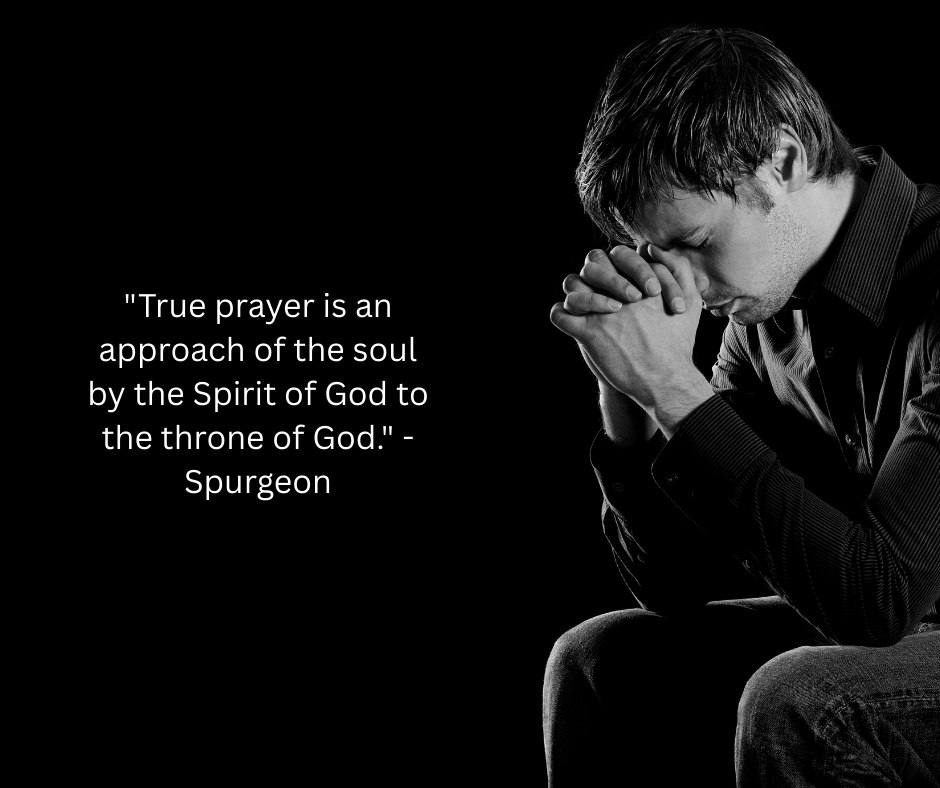
Charles Spurgeon once captured the essence of prayer with remarkable clarity: “True prayer is an approach of the soul by the Spirit of God to the throne of God.” Consider the weight of those words. Prayer isn’t simply talking to the ceiling or reciting memorized phrases. It’s the Spirit of God enabling our souls to approach the very throne room of the Almighty.
This definition transforms everything about how we view prayer. We’re not shouting into the void, hoping someone might hear. We’re being ushered by the Holy Spirit himself into the presence of the King of the universe. The Spirit takes our fumbling words, our groans too deep for utterance, our confused thoughts, and presents them before God with perfect clarity.
When we understand prayer this way, it becomes less about getting the words right and more about positioning ourselves before God. It’s about coming honestly, vulnerably, expectantly—knowing that we have divine assistance in making our approach.
The Call to Become a Praying People
What would it look like if we truly became people who love to pray? Not people who pray out of duty or guilt, but those who genuinely delight in communion with God?
In Matthew 6, Jesus repeatedly uses the phrase “when you pray”—not “if you pray.” The assumption is clear: prayer should be as natural and regular to believers as breathing. Jesus expects His followers to be people of prayer, not as a burden but as a privilege and necessity.
The invitation extends to every dimension of our lives. Prayer isn’t meant to be a solitary practice alone, though personal prayer times are essential. We’re called to pray in our marriages, transforming our homes into sanctuaries of communion with God. We’re invited to pray with others, experiencing the unique power that comes when two or three gather in Jesus’ name. And we’re encouraged to join in corporate prayer, where the unified voice of God’s people rises together.
There’s something transformative that happens when prayer becomes woven into the fabric of our daily existence. Problems that seemed insurmountable find perspective. Anxieties that threatened to overwhelm us find peace. Relationships that were strained find healing. Not because prayer is magic, but because prayer connects us to the source of all wisdom, peace, and love.
The Living and Active Word
If prayer is how we speak to God, Scripture is how God speaks to us. And what a word it is! Hebrews 4:12 describes it with vivid imagery: “For the word of God is alive and active. Sharper than any double-edged sword, it penetrates even to dividing soul and spirit, joints and marrow; it judges the thoughts and attitudes of the heart.”
Notice the active verbs: alive, active, penetrates, judges. This isn’t a dusty old book sitting on a shelf. God’s Word is dynamic, powerful, and deeply personal. It has the supernatural ability to reach into the deepest recesses of our being—places we ourselves can barely access—and bring truth, conviction, and transformation.
The double-edged sword metaphor is particularly striking. A sword cuts both ways. God’s Word both defends us from error and cuts away the things in us that don’t belong. It protects and purifies. It comforts and confronts. It reveals God’s character while simultaneously revealing our own hearts.
Cultivating a Love for Scripture
The call isn’t just to read the Bible, but to love it. There’s a significant difference. We can read Scripture out of obligation, checking it off our morning routine. Or we can approach it with genuine hunger, eager to encounter the living God through His living Word.
Loving God’s Word means reading it with expectation. It means meditating on it, turning passages over in our minds throughout the day, letting truth sink deep into our consciousness. It means applying what we read, allowing Scripture to shape our decisions, attitudes, and actions.
One practical way to deepen our engagement with Scripture is to study passages before and after hearing them taught. When we prepare our hearts beforehand, we come ready to receive. When we review afterward, we cement what we’ve learned and discover new layers of meaning. This kind of intentional engagement transforms casual Bible reading into genuine discipleship.
The Path to Spiritual Robustness
Here’s the beautiful truth: when we commit to both prayer and God’s Word, we position ourselves for exponential spiritual growth. These two disciplines work in concert, each strengthening the other.
Prayer drives us to Scripture, as we seek God’s wisdom and direction. Scripture fuels our prayers, giving us language to express our hearts and promises to claim in faith. Together, they create a cycle of spiritual vitality that builds momentum over time.
A church filled with people who love to pray and love God’s Word becomes an unstoppable force for the kingdom. Such a community doesn’t just survive; it thrives. It doesn’t merely maintain; it multiplies. The spiritual robustness that develops isn’t about programs or strategies—it’s about people deeply connected to God and to one another through these ancient, powerful disciplines.
The Invitation
The invitation stands before us: to become people who genuinely love to pray and love God’s Word. Not people who occasionally pray when crisis hits or read the Bible when guilt motivates us, but people for whom these disciplines are life-giving practices we can’t imagine living without.
This isn’t about perfection or performance. It’s about positioning ourselves to receive all that God wants to give us. It’s about creating space in our lives for the Spirit to work, for truth to take root, for transformation to occur.
The journey begins with a simple decision: today, I will approach God’s throne through prayer. Today, I will open His Word with expectation. And tomorrow, I’ll do it again. Over time, these choices compound into a life marked by spiritual depth, wisdom, and intimate fellowship with the God who loves us beyond measure.
This resource is produced using original content from our Sunday Service with the assistance of AI.