
Matthew 16:13-19 NLT
Peter’s Declaration about Jesus
13 When Jesus came to the region of Caesarea Philippi, he asked his disciples, “Who do people say that the Son of Man is?”
14 “Well,” they replied, “some say John the Baptist, some say Elijah, and others say Jeremiah or one of the other prophets.”
15 Then he asked them, “But who do you say I am?”
16 Simon Peter answered, “You are the Messiah, the Son of the living God.”
17 Jesus replied, “You are blessed, Simon son of John, because my Father in heaven has revealed this to you. You did not learn this from any human being.
18 Now I say to you that you are Peter (which means ‘rock’), and upon this rock I will build my church, and all the powers of hell will not conquer it. 19 And I will give you the keys of the Kingdom of Heaven. Whatever you forbid on earth will be forbidden in heaven, and whatever you permit on earth will be permitted in heaven.”
In the ancient city of Caesarea Philippi—a place dominated by pagan temples and Roman imperial power—Jesus asked His disciples a question that would echo through the centuries: “Who do you say I am?”
Peter’s response changed everything: “You are the Messiah, the Son of the living God.”
This wasn’t just a clever answer. Jesus made it clear that this revelation didn’t come from human wisdom or reasoning. It was a gift from the Father. This is the foundation upon which everything else is built—not our intelligence, not our achievements, but God’s gracious revelation of who Jesus truly is.
The Builder and His Building
Jesus’ response to Peter’s confession is profound: “On this rock I will build my church, and the gates of Hades will not overcome it.”
Notice the emphasis: “I will build.” The initiative belongs entirely to Jesus. The architecture is His. The construction is His work. Whatever role we play—and it is real and significant—we are not the architects. We are foundation material, shaped and laid by the Master Builder Himself.
This is both humbling and liberating. We don’t have to manufacture the church’s success or engineer its growth. We are called to surrender, to be obedient, and to trust the One who is doing the building.
And what a promise He makes: the gates of Hades will not overcome it. Speaking these words in Caesarea Philippi—literally known as “the Gate of Hades”—Jesus declared that His church would be powerful, victorious, and unconquerable by death itself.
The Keys of the Kingdom
Jesus gave His followers something extraordinary: “I will give you the keys of the kingdom of heaven.” These aren’t keys to a building or an organization—they’re keys to the kingdom of heaven itself. We’ve been delegated spiritual authority to govern on earth, to participate in the prayer we’ve all prayed: “Your kingdom come, Your will be done, on earth as it is in heaven.”
This binding and loosing isn’t about control—it’s about proclamation. The church becomes the means by which access to the kingdom is made available to the world. We open doors for others to enter, not through coercion or power structures, but through declaration of who Jesus is.
Restored to Serve
Before Peter could fully step into his calling, there was unfinished business. He had denied Jesus three times by a fire in a courtyard. Now, by another fire on a beach, the risen Jesus met him exactly where the failure happened.
Three times Jesus asked: “Do you love me?”
Three times Peter answered.
Three times Jesus commissioned him: “Feed my lambs. Take care of my sheep. Feed my sheep.”
This is restoration at its most beautiful. Jesus wasn’t rubbing Peter’s failure in his face—He was rebuilding what was broken, one question at a time. Peter was reinstated not to a position, but to a calling defined entirely by love for Jesus and care for those Jesus loves.
Then came the shadow: Jesus prophesied that Peter would stretch out his hands—a reference to crucifixion. This path would cost everything. And immediately after this sobering prophecy, Jesus said the same words He’d spoken years earlier on the shore: “Follow me.”
The call hadn’t changed. The cost had become clearer, but the call remained: Follow me.
The Power to Build
It’s fitting to remember that the church was birthed at Pentecost, when the Holy Spirit came upon the gathered believers. Before sending His disciples out, Jesus told them to wait for the gift the Father promised. They gathered, prayed, and worshiped in hopeful expectation.
Then suddenly, a sound like a violent wind filled the house. Tongues of fire rested on each person. They were filled with the Holy Spirit and began speaking in other tongues.
What followed was extraordinary: a community bold and courageous, stopping at nothing to proclaim the kingdom of God. Their counter-cultural lifestyle became a testament to God’s power and goodness. Though Jesus had ascended, God remained powerfully present through His Spirit, leading, guiding, strengthening, and speaking.
The church Jesus promised to build was being formed through the empowering and guiding of the Holy Spirit.
Living Stones Together
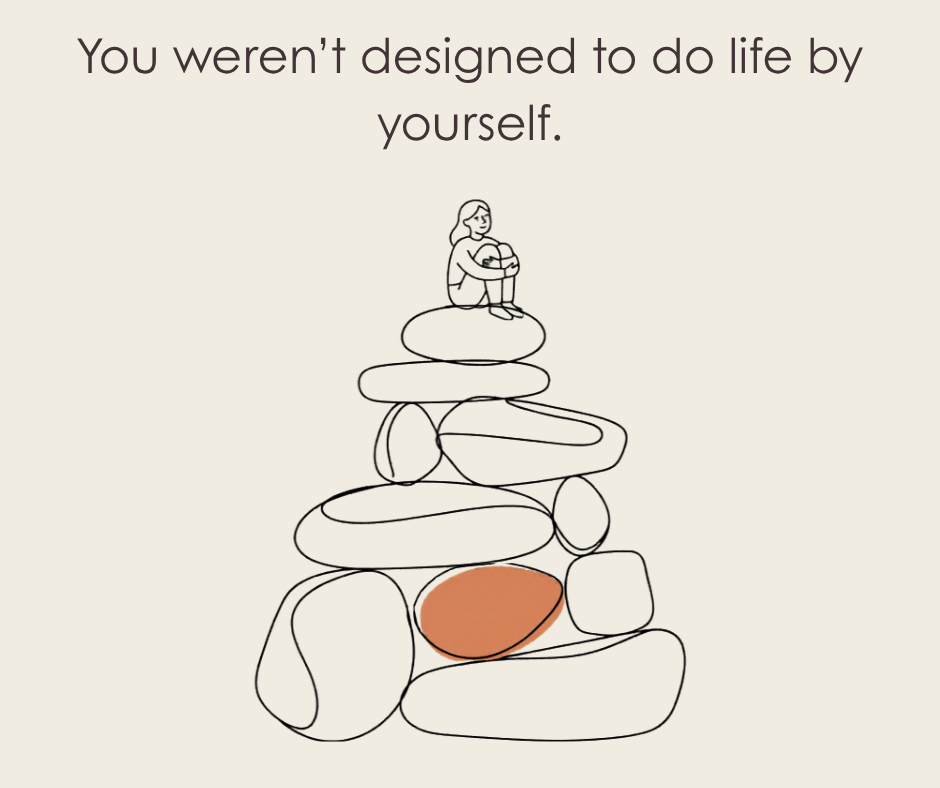
The apostle Peter, writing years later to scattered, suffering believers, described the church in remarkable terms. He called Jesus “the living stone, rejected by humans but chosen by God.” Then he said something revolutionary: “You also, like living stones, are being built into a spiritual house.”
Peter—the rock upon whom Jesus said He would build His church—describes himself as simply one living stone among many, all oriented around the same cornerstone: Jesus Christ.
This community is called “a chosen people, a royal priesthood, a holy nation, God’s special possession.” The language once used exclusively for Israel now applies to this new, diverse community of Jesus followers. The building project hasn’t started over—it’s entered a new phase.
And what’s the purpose? “That you may declare the praises of him who called you out of darkness into his wonderful light.”
The church exists for proclamation. Its spiritual sacrifices aren’t animal offerings but lives of holiness, words of praise, and actions reflecting God’s character.
The Temple That Walks
Here’s the stunning reality: because of Jesus, God is no longer confined to temple buildings. We are the dwelling place of God. We are the living, breathing, walking temple of God. “Don’t you know that you are God’s temple and that God’s Spirit dwells in you?”
The church—you and I—are living stones shaped and woven together by God’s Spirit. When we lay down our lives in surrendered obedience to Christ, He invites us through His Spirit to be co-workers in His mission, proclaiming His light, love, and redemptive power to the world.
The Simple Call
Partnering with Jesus as He builds His church doesn’t require dramatic, drastic moves—though it might. It can be beautifully simple in our day-to-day lives: in our families, workplaces, friendships, schools, and communities.
It can be as simple as waking up each day and asking, “Holy Spirit, how do you want me to show God’s love today?”
Jesus is still saying what He said to Peter on that beach: “Follow me.” That word is still enough. Will you follow? Will you allow yourself to be shaped as a living stone in the temple God is building? Will you trust that the One who calls you to follow Him—even to costly places—is the same One who conquered death itself?
The church is being built. The question is whether we’re willing to be part of what the Master Builder is doing.
This resource is produced using original content from our Sunday Service with the assistance of AI.